Could voting fraud panel create an easy target for hackers -The Virginian-Pilot


CHERRY HILL, N.J. (AP) -- Officials from both parties had a consistent answer last year when asked about the security of voting systems: U.S. elections are so decentralized that it would be impossible for hackers to manipulate ballot counts or voter rolls on a wide scale.

But the voter fraud commission established by President Donald Trump could take away that one bit of security.

The commission has requested information on voters from every state and recently won a federal court challenge to push ahead with the collection, keeping it in one place.

By compiling a national list of registered voters, the federal government could provide one-stop shopping for hackers and hostile foreign governments seeking to wreak havoc with elections.

"Coordinating a national voter registration system located in the White House is akin to handing a zip drive to Russia," said Kentucky Secretary of State Alison Lundergan Grimes, a Democrat who has refused to send data to the commission.

Trump appointed the commission, led by Vice President Mike Pence, to examine integrity of the voting system, including practices that "could lead to improper voter registrations and improper voting." The president has asserted repeatedly and without evidence that several million fraudulent votes were cast in last year's election. Voting experts say that there is not widespread election fraud in the U.S. But Russian meddling in the 2016 campaign, as well as Russian attempts to meddle with state election systems, has raised concerns about US election security.

In June, commission Vice Chairman Kris Kobach, the Republican secretary of state in Kansas, asked state election officials for information about registered voters. The request included details such as driver's license and partial Social Security numbers - if they're considered public in the states. Several officials interpreted the request as saying that all the data would be made available publicly; the commission has since said that individual voters' information would be kept private.

Thirteen states plus the District of Columbia say they won't hand over the information, according to a tally by The Associated Press. Those that are complying have said that not everything on the commission's checklist could be shared under their state laws. Social Security numbers are widely off limits; in several states, birthdates and political party registrations are, too.

The IRS, Social Security Administration, banks and internet companies, among other entities, have far more information about many citizens. Political parties and other organizations have access to some voter registration information - though that permission often comes with restrictions on how they can use it and how widely they can share it.

Still, security experts and fair election advocates say that any records stored on computers are susceptible to attacks.

"It's creating more security vulnerabilities in our election system that don't seem to be necessary," said Barbara Simons, president of Verified Voting, an organization that advocates for transparent, accurate and verifiable elections.

Still, Bruce Schneier, the chief technology officer at the online security firm IBM Resilient, said hacking into a federal database can't affect voters' information in their home states. He said having a copy of data that's already on a federal hard drive "doesn't make it that much worse, assuming the federal government isn't idiotic about it."

A massive database of the U.S. Office of Personnel Management was hacked in 2015, compromising the personnel records of millions of federal employees as well as the security clearance information for many of them, which included personal information about their friends and relatives. The hack compromised the information of up to 21 million people. U.S. officials have said there were attempts by Russians to hack into election systems in 21 states. The FBI has confirmed intrusions into voter registration databases in Arizona and Illinois.

Louisiana Secretary of State Tom Schedler, a Republican, said last month that "the release of private information creates a tremendous breach of trust with voters who work hard to protect themselves against identity fraud." But in a statement this week, the Republican said he is not deeply worried about how the data the state is sharing will be guarded. "Because this data is public information, we have limited concerns regarding sharing it with the commission in terms of how it is housed," he said.

Andrew Appel, a Princeton University computer science professor who studies voting technology, said a new federal voter information database probably would not allow a hacker to manipulate data to make it look like some eligible voters are ineligible. "If someone hacked their database, they could come to believe things that aren't true," Appel said.

Commission spokesman Marc Lotter said states will send the data through a secure connection and it will be encrypted and kept on a White House system "designed to handle sensitive information."

Appel said states have all made some efforts to protect their own voter registration data from hacks. "At least initially," he said, "the president's commission didn't seem to have in place any organized way to secure this data."

In Maine, Secretary of State Matthew Dunlap, a Democrat who is a member of Trump's voting commission, is not handing over the information.

Dunlap said the information the commission is getting from other states "isn't wicked intimate" and may be too sparse to identity ineligible registered voters. Another commission member, Indiana Secretary of State Connie Lawson, said in a statement that the commission is aware of limitations of the data. But Lawson, a Republican, said the commission's work using the information could help find ways to help states improve the "quality and integrity" of their voter rolls.

But it could still be hacked, Dunlap said.

"The best way to protect people's private information," Dunlap said, "is not to have it in the first place."


Indiana Legislative Black Caucus Holds Town Hall In Fort Wayne -WBOI (NPR- Fort Wayne)

  AUG 7, 2017
CREDIT ZACH BERNARD/WBOI NEWS

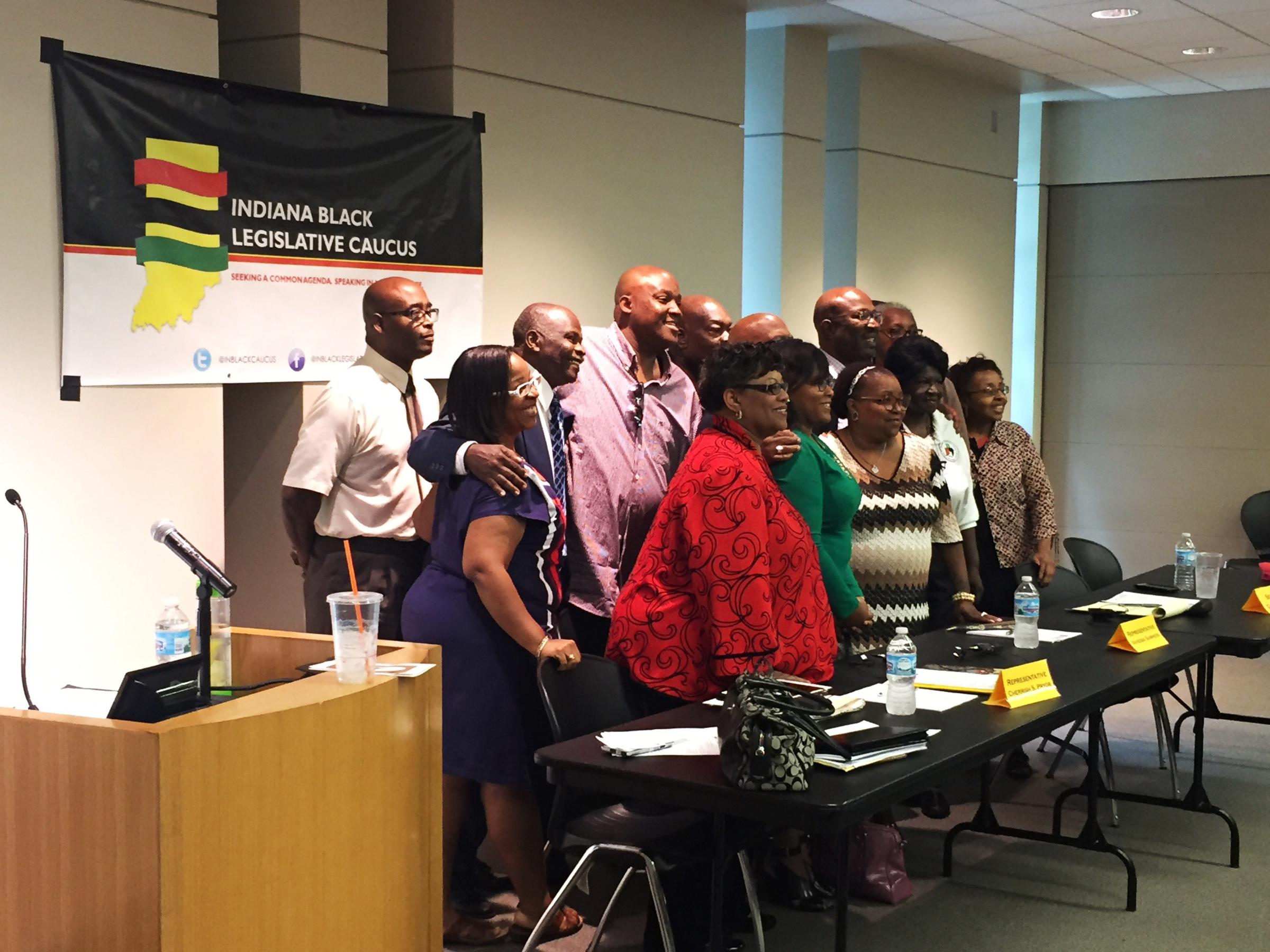
Members of Indiana’s Black Legislative Caucus held a town hall at the Allen County Public Library on Saturday afternoon.

Black turnout in the 2016 election dropped 4.7 percent nationally compared to 2012, a significant dip compared to the 2.5 percent rise in white turnout.

Fort Wayne sixth district councilman Glynn Hines says the transparency that comes from town hall meetings is beneficial to the political process, and it encourages participation.

“These legislators were able to identify what it is we can do, which is contact our local legislators and ask them how they voted, and then why they voted that way,” said Hines.

The caucus also touched on the statewide impact of food desserts, something Hines says has affected his district on the southwest side of Fort Wayne.


Hacking the Vote: Why Voting Systems Aren’t as Secure as You Might Think- KQED (NPR-San Francisco)

While President Trump appears to be debating whether the voting system in the U.S. was compromised by the Russians, hackers at Defcon were hard at work trying to understand the vulnerabilities.

Defcon is the annual hacker conference in Vegas and the buzz this year centered around the Voting Machine Hacking Village.

A dozen electronic voting machines, like you might see at your local polling place, were set up along the walls of a conference room. In the center were tables where hackers took some machines apart.

In the corner three men sat at a table trying to hack into a cartridge used to store votes on one machine.

“So we still have wrong communication parameters,” a hacker named Bryan said to one of the others. “Bang your head again.”

Bryan, who declined to give his last name, is a ‘”white hat” hacker, which means he works to protect computer systems.

To do that he needs to learn how the bad guys break in. Some of the work to figure that out can be illegal, which is why hackers at Defcon like to stay anonymous.

Hackers at Defcon take apart voting machines to try and understand how voting systems can be compromised. (Queena Kim)

In fact, until 2015, hacking voting machines — even to do research — was against the law unless you got a special waiver, said Matt Blaze, a computer science professor at the University of Pennsylvania.

“So far, only a few dozen people who are computer scientists thinking about this have been able to get access to these machines,” Blaze said.

Blaze helped set up the voting village at Defcon. A decade ago he obtained a waiver to study electronic voting machines in California and Ohio.

“And my team of graduate students and I were able to very quickly discover a number of really serious and exploitable problems with those systems,” he said.

But Blaze said researchers missed more important targets: the companies that supply the electronic voting machines and county election offices.

Unlike voting machines, which aren’t generally connected to the Internet, the companies that supply them and county offices that tabulate the votes are online.

The risk, said Blaze, is that hackers could get their hands on the list of registered voters that’s checked on Election Day, the description of the ballots that are presented to voters and the systems that count the final tallies.

Security researchers need to better understand all the computing systems used in voting, Blaze added. So the hackers at Defcon set up a computing network that mocks ones used at a typical county voting office.

And they asked hackers to have a go at it.

On the first day, three hackers attempted to figure out a password in order to get the list of voters. A day later, they succeeded, said Gil Brice, who helped set up the mock network. He said a few other hackers got into the database of the mock county voting office.

“The manufacturers and the states can’t bury their head in the sand,” Brice said. They can’t say, “‘Yes it’s already secure, we don’t have to worry about it.’”

Brice says in less than 48 hours, hackers at Defcon demonstrated that the computer systems used in voting in this country aren’t really as secure as you might think.


Trump Administration Stirs Alarm Over Voter Purges -NBC News

Trump Administration Stirs Alarm Over Voter Purges 

Jane C. Timm
5 hrs ago
Image: Larry Harmon stands in his home in Kent, Ohio, on Aug. 4, 2017. Harmon was removed from the voting rolls after not voting in the last election.© Larry Harmon stands in his home in Kent, Ohio, on Aug. 4, 2017. Harmon was removed from the voting r... Image: Larry Harmon stands in his home in Kent, Ohio, on Aug. 4, 2017. Harmon was removed from the voting rolls after not voting in the…

Larry Harmon, 60, hadn't voted in a while when he drove to the high school in November 2015 to weigh in on a local referendum in Kent, Ohio. But he wasn't allowed to cast his ballot.

"I served in the military and they tell us, 'Oh, you're fighting for freedom.'" he said. "Then you come back and you're taken off the voter rolls because you didn't vote for two elections? That doesn't make sense. I thought that was our right."

Thanks to six years of inactivity — and a single piece of unanswered mail asking him to confirm his voter registration — Harmon, now a plaintiff in a major voter purge lawsuit before the Supreme Court, was removed from Ohio's voter rolls.

"I've been paying my taxes, paying my property taxes, registering my car," he said. "All the data was there for (election officials) to know that I was there."

Harmon was a casualty of the latest voting battleground: How America's lists of registered, eligible voters are maintained.

The rolls are messy, due to deaths as well as those who move between states and neglect to unregister from their past place of residence. Both sides of the debate say something should be done to ensure greater accuracy.

But voting rights advocates have expressed increased anxiety over how some states, like Ohio, have aggressively pruned their voter rolls in the name of preventing widespread, yet still unproven, voter fraud. Those advocates say voter purges require a surgeon's scalpel and argue that aggressive purges suppress mostly minority and Democratic votes.

Thanks to President Donald Trump's voter fraud commission and a Justice Department memo signaling his administration's desire to take action on voter roll maintenance, they fear even more eligible voters will be at risk.

In June, the DOJ alarmed advocates by sending a letter to 44 states — those covered by the National Voter Registration Act, which the Justice Department enforces — asking for details on their purge processes.

"This is a prelude to setting up voter purging," said Vanita Gupta, who during the Obama administration was head of the DOJ's Civil Rights Division, which houses voting rights enforcement.

Still, conservatives say messy voter rolls create opportunities for fraud.

"The threat is, at least in considerable part, voter fraud," said Bob Popper, a senior attorney and director of the Election Integrity Project at Judicial Watch, a conservative group that sued to insist on Ohio's voter purge process.

The president has said the messy voter rolls are a sign of fraud, and must be investigated.

"When you look at the people that are registered — dead, illegal and two states and some cases maybe three states — we have a lot to look into," Trump told ABC News in January.

Why Getting It Right Is So Hard

Voter purges — what election officials call the removal of outdated registrations — have existed as long as elections have, and are required by federal law.

Clean, accurate voter rolls might sound like an obvious goal. It saves local authorities money while making election operations more efficient. But the country's voter rolls are typically a mess. A 2012 Pew survey found one in eight active registrations to be invalid or inaccurate. The rolls showed 1.8 million dead voters still on the books, while 2.75 million people had registrations in more than one state.

One reason? The decentralized, localized voter rolls are built for registration, not removal. Getting on the rolls at a new address is easier than removing your name from the county you just left, and different states and districts manage their rolls differently, too.

What's more, keeping voter rolls properly maintained is complicated, since election officials have to keep tabs on every voter who dies or moves. Thousands of voters have the same name and even the same birthday, and mistakes happen.

Florida Gov. Rick Scott went to vote in 2012 only to find that election officials believed he'd died because a voter named Richard E. Scott, born the same day as the governor, had passed away in 2006. The governor, whose full name is Richard L. Scott, was forced to cast a provisional ballot, something that can act as a fail-safe if an error has been made in certain circumstances.

On paper, it's easy for multiple voters to appear identical. For example, if election officials found "Michael Smith" had moved and registered in a neighboring state, they might believe a Michael Smith of the same name and birthday on their voter rolls to be the same person, and begin the purge process. But there are 25,280 registered voters with the name Michael Smith, and 18,397 of them, or roughly 73 percent, share a birthday with another Michael Smith, according to voter file data provided by TargetSmart and independently analyzed by the NBC Data Analytics lab. Take the name of the president's new chief of staff, John Kelly: There are 4,422 registered; 1,297 share a birthday.

It's one of the reasons critics have sharply questioned the plans of Trump's voter integrity commission, which is seeking to collect and analyze state voter data. The commission's co-chairman, Kansas Secretary of State Kris Kobach, built an opt-in system for states to share and compare voter roll data, the Interstate Crosscheck System. But Crosscheck regularly produces false matches: One study found that for every double vote found in the system, 200 people could be disenfranchised. Oregon and Florida opted out over problems like this.

Popper, of Judicial Watch, blamed messy voter rolls for lukewarm confidence in elections. Just 35 percent of voters said they were "very" confident in U.S. elections, with another 31 percent characterizing themselves as "somewhat confident" in a 2016 Gallup poll.

Indiana Secretary of State Connie Lawson, who sits on Trump's commission, recently purged nearly half a million voters in her state, or 10 percent of the voter rolls, after she was deputized by the state legislature to clean up the state's rolls following a legal challenge by conservative groups Judicial Watch and True the Vote.

"It really is about the competence of the election. I've never had someone call my office and say my record was removed erroneously," Lawson told NBC News. "I have had people call…after seeing a deceased neighbor in the poll book, and say 'Why aren't you keeping these lists correct?'"

Advocates agree that cleaner voter rolls are much needed, but argue that eligible voters must not be disenfranchised in the process.

"Our concern with voter purges is you may take people off inaccurately and not give them notice," said Dale Ho, director of the Voting Rights Project at the American Civil Liberties Union. If you're showing up on Election Day and trying to vote and being told, sorry you're not on the voter rolls, you've effectively been disenfranchised, through no fault of your own."

Thousands Knocked Off the Rolls

There's no way of knowing exactly how many people have been erroneously removed from records across the nation.

Purges are done by countless officials at the state and local level. There's no standardized way of keeping records and almost no way of telling eligible voters who are purged improperly from appropriate cuts. Wrongful purges are often not known until eligible voters are turned away at the polls, as Harmon was at his local high school when he tried to vote on a local marijuana referendum.

In Harmon's case, inactivity — namely, choosing not to vote in midterm elections of 2010 — triggered what's called a "confirmation process," wherein a letter was sent to his address asking him to confirm his voter registration. Harmon never saw it; he didn't vote in 2012 or 2014, either, and was taken off the rolls four years after that notice. The Supreme Court will decide this fall whether inactivity and nonresponse to a mailing count as evidence of ineligibility, which is a key to legal purging under the 1993 National Voter Registration Act.

Image: Voters Cast Their Ballots For The 2016 U.S. Presidential Election© Voters cast ballots inside the Prairie Township Fire Station polling location in Holmesville, Ohio, ... Image: Voters Cast Their Ballots For The 2016 U.S. Presidential Election

After Harmon, who was backed by advocates like the American Civil Liberties Union and the liberal think-tank Demos, contested Ohio's purges in court, a federal judge ordered that voters purged for inactivity and failing to respond to a notice be allowed to cast provisional ballots if they still lived in the county. The court order allowed 7,500 ballots to be counted in the 2016 presidential election, a number Demos' attorney Cameron Bell said is just a fraction of the number of eligible voters who were purged but might not have voted.

What's more, advocates say, these purges disproportionately affect minorities.

Purges are "going to hit the communities of color the most. We have U.S. Census data that shows that minorities are represented in 85 of the most common 100 names," said Gupta, now president and CEO of the Leadership Conference on Civil and Human Rights.

Ohio is hardly alone in aggressive purges. Georgia is being sued over a similar process.

And in North Carolina, ahead of the 2016 election, a group of counties purged 6,700 voters in predominantly black, Democratic-leaning communities whose mail was returned as undeliverable. A judge mandated voters' registrations be restored and called it "insane."

Meanwhile in Florida, after state officials identified 180,000 voters suspected of being noncitizens in 2012 by running federal immigration system data against its voter rolls, local officials refused to conduct the purges, citing enormous error rates. Eighty-seven percent of the voters on the list were minorities.

The data used to purge voters is key. In 2012, Texas compared its voting records to national death data, repeatedly mistaking healthy Texans for dead Americans in other states. The state later apologized and abandoned the practice.

The Future of Voter Purges

When Trump's voter fraud commission sent a letter to secretaries of state requesting public voter data, the request was met with a flurry of headline-making refusals, as voting rights advocates and privacy advocates alike denounced the idea. For some, however, the Department of Justice's inquiry to states about their purge processes, sent on the same day, set off a different alarm.

"Normally, the Department of Justice would send a letter like this to a particular state it was investigating, based on a piece of evidence that the state was violating the law," said Loyola Law School Professor Justin Levitt, who had worked at the Department of Justice. "You wouldn't see this if they weren't anticipating litigation."

The Justice Department isn't alone in considering lawsuits to prompt states to purge voter rolls. Many of the most aggressive purges in recent years have come thanks to legal challenges from outside parties, and it's a trend that promises to continue.

Image: Larry Harmon sits in his home in Kent, Ohio, on Aug. 4, 2017. Harmon was removed from the voting rolls after not voting in the last election.© Larry Harmon sits in his home in Kent, Ohio, on Aug. 4, 2017. Harmon was removed from the voting rol... Image: Larry Harmon sits in his home in Kent, Ohio, on Aug. 4, 2017. Harmon was removed from the voting rolls after not voting in the last…

Judicial Watch and another conservative group, True the Vote, sued Ohio in 2012, arguing that three counties had more voters than there were voting-age residents, while 31 counties in Ohio had voter rolls with 90-100 percent of all voting-age residents. Ohio settled in 2014, vowing to double down on purging. In April, Judicial Watch threatened 11 states with similar litigation.

"I would expect a couple of lawsuits in the next couple of months," Popper said.

Harmon, the Ohio voter turned away at the polls, initially thought he'd done something wrong when he couldn't vote.

"I kind of blamed myself initially," he said. "I did a little Googling, and I found out about the purge and found out that if you hadn't voted in six years they'd take you off. Then I got a little mad."

Now, as his case heads to the Supreme Court, he said feels good that he's spoken up.

"I'm glad I stood up for myself and wrote a letter and complained about it. I think a lot of people just think it's not a big deal — if I don't use my 'right to bear arms,' they don't stop me from buying a rifle next year because I didn't buy one this year."



Today is the 52 Anniversary of the Voting Rights Act of 1965 -The History Channel

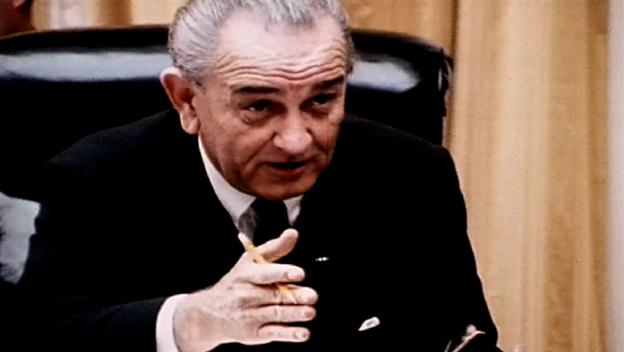
The Voting Rights Act, signed into law by President Lyndon Johnson (1908-73) on August 6, 1965, aimed to overcome legal barriers at the state and local levels that prevented African Americans from exercising their right to vote under the 15th Amendment (1870) to the Constitution of the United States. The act significantly widened the franchise and is considered among the most far-reaching pieces of civil rights legislation in U.S. history.LBJ: Before the War on PovertyPlay video

Lyndon Johnson assumed the presidency in November 1963 upon the assassination of President John F. Kennedy. In the presidential race of 1964, Johnson was officially elected in a landslide victory and used this mandate to push for legislation he believed would improve the American way of life, such as stronger voting-rights laws.

Did You Know?

In 1965, at the time of the passage of the Voting Rights Act, there were six African-American members of the U.S. House of Representativesandno blacks in the U.S. Senate. By 1971, there were 13 members of the House and one black member of the Senate.

After the U.S. Civil War (1861-65), the 15th Amendment, ratified in 1870, prohibited states from denying a male citizen the right to vote based on “race, color or previous condition of servitude.” Nevertheless, in the ensuing decades, various discriminatory practices were used to prevent African Americans, particularly those in the South, from exercising their right to vote.

During the civil rights movement of the 1950s and 1960s, voting rights activists in the South were subjected to various forms of mistreatment and violence. One event that outraged many Americans occurred on March 7, 1965, when peaceful participants in a voting rights march from Selma, Alabama, to the state capital in Montgomery were met by Alabama state troopers who attacked them with nightsticks, tear gas and whips after they refused to turn back. Some protesters were severely beaten, and others ran for their lives. The incident was captured on national television.

In the wake of the brutal incident, Johnson called for comprehensive voting rights legislation. In a speech to a joint session of Congress on March 15, 1965, the president outlined the devious ways in which election officials denied African-American citizens the vote. Blacks attempting to vote often were told by election officials that they had gotten the date, time or polling place wrong, that they possessed insufficient literacy skills or that they had filled out an application incorrectly. Blacks, whose population suffered a high rate of illiteracy due to centuries of oppression and poverty, often would be forced to take literacy tests, which they inevitably failed. Johnson also told Congress that voting officials, primarily in Southern states, had been known to force black voters to “recite the entire Constitution or explain the most complex provisions of state laws,” a task most white voters would have been hard-pressed to accomplish. In some cases, even blacks with college degrees were turned away from the polls.

The voting rights bill was passed in the U.S. Senate by a 77-19 vote on May 26, 1965. After debating the bill for more than a month, the U.S. House of Representatives passed the bill by a vote of 333-85 on July 9. Johnson signed the Voting Rights Act into law on August 6, with Martin Luther King Jr. and other civil rights leaders present at the ceremony.

The act banned the use of literacy tests, provided for federal oversight of voter registration in areas where less than 50 percent of the nonwhite population had not registered to vote, and authorized the U.S. attorney general to investigate the use of poll taxes in state and local elections (in 1964, the 24th Amendment made poll taxes illegal in federal elections; poll taxes in state elections were banned in 1966 by the U.S. Supreme Court).

Although the Voting Rights Act passed, state and local enforcement of the law was weak and it often was ignored outright, mainly in the South and in areas where the proportion of blacks in the population was high and their vote threatened the political status quo. Still, the Voting Rights Act gave African-American voters the legal means to challenge voting restrictions and vastly improved voter turnout. In Mississippi alone, voter turnout among blacks increased from 6 percent in 1964 to 59 percent in 1969.

Since its passage, the Voting Rights Act has been amended to include such features as the protection of voting rights for non-English speaking American citizens.

For more informatio please go to this link: http://www.history.com/topics/black-history/voting-rights-act 


On Voting Rights Act anniversary, ‘the greatest threat to voting rights in the past half-century’- Sacramento Bee

S


33 states, 36 localities asked DHS for help protecting election system- CNN

US intel chiefs on Russia hacking election

Washington (CNN)More than five dozen state and local election offices requested help from the Department of Homeland Security to protect their election systems from cyberattacks, according to DHS documents obtained by CNN.
Before the 2016 US election, 33 states and 36 local governments requested an assessment of their election systems to help prevent cyberattacks, and another two states and six localities requested the assessment since the election, according to a DHS memo issued in response to questions from Missouri Democratic Sen. Claire McCaskill.
The memo gives more detail on the scope of how many states and cities had concerns about the potential risk of a cyberattack last year, even before the Obama administration had issued its report confirming Russian hackers meddled in the US election.
Last month, DHS officials testified that the election systems of 21 states were potentially targeted by Russian government-linked hackers. None of the systems targeted were involved with vote counting, and only a very small handful of those states actually suffered any type of breach.
The DHS memo does not say how many of the 21 targeted states also requested a cyberassessment from the department.
CNN had previously reported that 33 states asked for assistance prior to the election, but the memo confirms that number and shows that more than three times as many localities as previously been known also requested the cyberassessments.
With just days left in the Obama administration, former Homeland Security Secretary Jeh Johnson declared election systems a "critical infrastructure," a designation that made it easier for DHS to aid state and local governments to protect their election systems.
In the memo to McCaskill, DHS says it has "no plans to make any changes to the designation of election infrastructure as a critical infrastructure subsector."
But the relationship between federal officials and state and local governments over protecting election systems has been rocky at times. State election officials expressed frustration and disappointment with the federal government following a meeting in Indiana last month preventing cyber attacks.
McCaskill, the top Democrat on the Senate Homeland Security and Government Affairs Subcommittee, wrote to then-Homeland Security Secretary John Kelly in March asking for more information about the critical infrastructure designation and the efforts to help state and local governments protect their voting systems.
She sent a staff memo to committee members on Wednesday detailing DHS' work with state and local government to protect their election systems. The memo, obtained by CNN, notes that DHS provides the assessments to states and local governments for free, although those governments have to cover the costs to address any exposed vulnerabilities.
Like the intelligence community, DHS says that Russian officials were involved with hacking surrounding the 2016 US election, a conclusion that President Donald Trump has yet to agree fully with.
In the memo, the department states it observed along with the intelligence community "Russian cyber actors attempting to access voter registration databases prior to the 2016 elections." In addition, DHS said that it shared technical information to help states and local governments identify and stop malicious cyber activity, which included reports "on malicious activity by Russian civilian and military intelligence services."
The DHS memo also detailed how department determined that Russian hacking did not target vote tallying systems.
"There are no indications nor observed evidence of Russian actors using cyber or physical means to target voting systems, which include voting machines (the electronic machines used by voters to cast ballots) and vote tallying systems (the electronic machines used by election officials to count and tally marked ballots)," the memo states. "These voting systems should not have active connections to the Internet during the voting process, and are rarely, if ever connected to the Internet at all."
DHS explained that the risk assessment the state and local governments have requested provide a scan against potential vulnerabilities, which were conducted remotely on a weekly basis. One state also ended its agreement with DHS for the scans after the election, according to the memo.
DHS also offered states a more in-depth risk and vulnerability assessment, which one state requested before the election and another afterward.
The more in-depth scan that two states requested includes "penetration testing, social engineering, wireless access discovery and identification, as well as database and operating system scanning," according to the memo.

It only takes 90 minutes to hack a US voting booth -NY POST

BLauren Tousignant                                                     August 1, 2017 | 3:40pm

Reuters

Hackers raced against the clock to see who could break into a US voting machine the fastest – and it only took an hour and a half.

DEF CON, an annual hacking and cybersecurity convention in Los Angeles, hosted their first-ever “Voting Machine Hacking Village” this past weekend. The convention purchased 30 voting machines – some of which are still in use – from government auctions and eBay and let hackers have at it.

Ninety minutes into the event and hackers began exposing huge security flaws in the machines’ defenses.

One team “rick-roll’d” a touchscreen machine so that it played Rick Astley’s 1987 hit “Never Gonna’ Give You Up” and another simply Googled passwords before finding the one that allowed them in. Other teams found unlocked USB ports or broke open the locks that covered them, to install malicious software.

One contestant even gained access through a machine’s Wi-Fi system – which could hypothetically allow a hacker to change a vote from anywhere.

All of the security vulnerabilities uncovered by the hackers had never been detected before, according to one of the event’s coordinators.

“Without question, our voting systems are weak and susceptible,” Jake Braun, who came up with the “Voting Village” idea, told The Register. “Thanks to the contributions of the hacker community, we’ve uncovered even more about exactly how.”

This was DEF CON’s first voting machine hackathon since such efforts used to be illegal under the Digital Millennium Copyright Act. But in October 2015 the Librarian of Congress made an exemption that allows people to hack such systems in order to make them more secure.

In June, a Department of Homeland Security official said that Russian hackers targeted 21 states during the US 2016 presidential election. Reports also allege that Russia targeted France’s presidential election in May. Russia has continued to deny interference in either.

A few of the machines in the contest are no longer in use in the US. Further, voting machines in the US vary from county to county, making it more difficult for hackers to interfere with national election results.

“The best possible outcome is that the village results in a book of vulnerabilities to share with the [Federal Election Commission], states and other firms like ours,” Eric Hodge, a director at CycberScout and consultant for Kentucky’s Board of Elections, told The Hill.“Once researchers know, there will be pressure for changes.”


Younger voters eclipse Baby Boomers for first time - The Hill

Millennials and members of Generation X accounted for a larger number of votes in the 2016 elections than did Baby Boomers and older generations, marking a generational shift that is likely to influence the way both Democrats and Republicans approach a changing electorate.

A new report by Richard Fry, a labor economist at the Pew Research Center, found that those under the age of 51 — Generation X and Millennials — accounted for just shy of 70 million votes in 2016. Baby Boomers and members of the Silent and Greatest Generations accounted for just under 68 million votes.

Baby Boomers still account for the single greatest share of the electorate. The 48.1 million votes boomers cast in 2016 represented about 35 percent of the electorate.

To Read more of this article please click on the link: 

http://thehill.com/homenews/344625-younger-voters-eclipse-baby-boomers-for-first-time?rnd=1501531052&utm_source=&utm_medium=email&utm_campaign=10102


Trump Vote Fraud Commission Could Not Be More Divided -NBC News

As the president's commission on voter integrity formally begins work, it is clear that members don't see eye to eye on the key question facing the panel: Is there widespread fraud at the ballot box?

Some of President Donald Trump's appointees say yes, including its vice chairman, Kansas Secretary of State Kris Kobach; others on the commission argue certainly not and want to focus on issues like upgrading aging voting systems and encouraging registration.

Commission member, Connie Lawson, a Republican, has been Indiana's secretary of state since 2012. Before that, she served in the Indiana state Senate, where she sponsored the state's voter ID law. Lawson was recently elected president of the National Association of Secretaries of State.

At the meeting, she tried to stake out a middle ground, focusing on seeking better communication between the federal government and the states and helping states clean up their voter rolls.

While running for secretary of state, she backed strict voter ID laws as one way to deter voter fraud. "I believe everybody that takes responsibility to vote in one of our elections deserves to have their vote counted accurately and to not have that vote canceled out by someone committing fraud," she told NBC affiliate WTHR of Indianapolis.

You can read the entire article by clicking on this link: 

http://www.nbcnews.com/politics/white-house/trump-vote-fraud-commission-hopelessly-divided-n785461


Volunteer Donate

get updates